I'll be blunt . . . my blogging practices have been more or less shameful this quarter. With that said, let me say that I honestly wish to redeem myself with the following post.
Simply put, film is an incredibly potent medium. It's ability to move people is unparalleled. The rhythm of music, the starkness of the visual image, the layered story-telling of the written word - they all combine in a vibrant amalgamation that is cinema.
I have always been drawn to film, even from a very young age. It has been a part of how I define myself for so long now that can't imagine life without it: both inexplicably and undeniably I am a product of the films I've seen, the celluloid stories I've been told. Certain characters that I've come to know very well - George Bailey, Jean-Dominique Bauby and Benjamin Braddock, to name a few - have been assimilated into my collective unconscious. These personalities reside in the way I hold myself: the language I use, the texture of the sentiments I espouse, the very perceptions I hold of myself are more often than not the residual effect of endless hours of film exposure. I've finally reached a point in my life where I can admit that I am inextricably linked to the films I love.
There is a beautiful (if not a bit histrionic) passage in Emily Brontë's Wuthering Heights that does justice to the point I'm trying to convey. Catherine, the novel's female protagonist, comes to the following conclusion concerning her lover, Heathcliff: "If all else perished, and he remained, I should still continue to be . . . He's always, always in my mind: not as a pleasure, any more than I am always a pleasure to myself, but as my own being." Although that may be somewhat of an intense parallel to draw concerning my relationship with film, it is worth mentioning that I feel more at home with certain films than I ever could with people. They speak to a level of my psyche that I don't completely understand as of yet - a realm rooted in reason, but so easily swayed by emotion; that can be appreciative of technique, yet revel in all that can be conveyed by feeling. I see film - and through film, I see myself. Perhaps it's more personal than the love one could hope to share with another human being. And I'm sure at this point you must be thinking that I've either lost my mind or that I'm simply writing to fill space with florid metaphors and analogies, but that simply isn't the case. I am actually that passionate about cinema, at often times feeling my life has finally become a film of its own.
I'll try to keep this discourse brief. I am a very different person because of film. It has changed the way I tell stories. It has continually altered my beliefs. And, above all things, it has allowed me to better appreciate myself and other people. There is no doubt in my mind that my future will allow me to celebrate all it is that film can achieve.
On an unrelated note, considering that this is my final blog entry, I'd just like to state that Art of Film has been a thoroughly enjoyable experience. Mr. Daszenski, you are a deeply gifted teacher and an insightful human being, and this class was wonderful - no doubt one of the highlights of my time spent in high school.
And I suppose that's all there really is for me to say. So, I'll just leave you with a series of images set to Radiohead's "The Tourist." Interpret as you will.
It barks at no one else but me
Like it's seen a ghost.
I guess it seen the sparks a-flowing
No one else would know.
Hey man slow down, slow down
Idiot, slow down, slow down.
Sometimes I get overcharged
That's when you see sparks.
You ask me where the hell I'm going
At a thousand feet per second.
Hey man slow down, slow down
Idiot slow down, slow down.
Hey man slow down, slow down
Idiot slow down, slow down.
Thursday, January 29, 2009

Tuesday, January 27, 2009
"Slumdog" Soars
There are certain films out there that people should see simply for their own good. Slumdog Millionaire is such a film, blending effective story-telling, lush cinematography, and unconventional music for the sake of providing a brief respite from the numb, endless cycle of everyday life. While I do not purport this film to be the best thing since sliced bread, it nevertheless is a noteworthy triumph for director Danny Boyle and a progressive showcase of Bollywood aesthetics for an inexperienced American public.
Simply put, go see this film.
Below, the song that plays over the end-credit dance sequence (the actual dance sequence is continually removed from Youtube due to copyright laws). I dare you to remain completely motionless while listening to the infectious beat of "Jai Ho." It's a scientifically proven impossibility.
Monday, January 26, 2009
Rebel, Rebel . . . Academy Awards
The nominees have been announced. The votes have been tabulated. The actresses have starved themselves for several weeks. The moment of truth is upon us!
And the Horribly-Outdated-and-Politically-Incorrect South Rebel goes to . . .
Best Film: The Diving Bell and the Butterfly
A beautiful work of cinematic art. One of my favorite films. If you're not tearing up, you have ice coursing through your veins.
The Ishtar Award: High Noon
It had the best of intentions . . . it just put me to sleep.
Best Actor / Actress: Bogie & Bergman
Duh.
Best Kiss / Love Scene: Bogie & Bergman
Duh.
Best Divine Dog Syndrome: Peter and the Wolf
Wolves are closely related to dogs.
Best Musical Score: Chungking Express
I now have The Mamas and The Papas on my iPod.
The Pound of Flesh Award: Pan's Labyrinth
I saw this film in Spanish class, but the scene in which Captain Vidal gets what's coming to him is priceless.
Best Villain: Mr. Potter (It's a Wonderful Life)
We didn't see this film in class either, but Mr. Potter is the epitome of all that is wrong with this world.
Best Line of Dialogue: Insert various Casablanca quotes here.
Dynamic Duo Award: Chihiro and Haku
Hayao Miyazaki owns.
Best Location: TIE - Mount Rushmore & Rushmore Academy
You know it.
Unforgettable Mise-en-Scene: The shot containing the image of Martin Luther King, Jr. and Malcolm X in Sal's Famous Pizzeria while the building is being burnt to the ground.
Best Hair: Becky Fischer.
Jesus wants you to look fabulous.
Film You Wish Had a Sequel: Jesus Camp
Jesus Camp II: The Wrath of Khan.
Best Concluding Shot: Do The Right Thing
It doesn't resolve anything. Delicious.
Honorary Award: Julian Schnabel
This man is my hero.
Best -Ism: German Expressionism.
It's the only "ism" I remember.
Break in Continuity: Chungking Express.
Because.
Funniest Moment: Opening credits of Dr. Strangelove.
Stanley Kubrick is one twisted f*ck. But I love it.
Most Uncomfortable Scene: The majority of Jesus Camp.
Moving on . . .
Most Challenged: Jean-Dominique Bauby
Go see The Diving Bell and the Butterfly. Now.
Pure Champagne: TIE - The Diving Bell and the Butterfly & Casablanca
That's all she wrote!
And there you have it! The best of times, the worst of times, the winter of our discontent, and so on! Go forth and continue to watch films!
Sunday, January 4, 2009
Judge for Yourselves.
Last night I saw Bill Maher's Religulous. I'll (hopefully) write more about this film later, but for the time being let me simply post a banned cartoon featured in the film that illustrates, "the Mormon philosophy regarding the origins of mankind."
Yeh . . . it's that good.
On a somewhat unrelated note, I'd like to include some poetry I've written concerning the views I hold on institutionalized religion (in the instance of this poem, Christianity).
Yeh . . . it's that good.
On a somewhat unrelated note, I'd like to include some poetry I've written concerning the views I hold on institutionalized religion (in the instance of this poem, Christianity).
find jesus
lift his name on high
while mortals are
left
grappling
god, give me strength
good lord
holy, blessed
virgin-mother
guide us.
sooner
rather than later
coming
to see how
failure evolves out of
understanding how insignificant
your
abilities
cannot be
winning
into that blessed text
into a
religious epiphany of no
absolution
no solace in this
man’s heart
the
polluted chalice
cradling wine,
not salvation.
find a
personal jesus
and when he is lost
statues
run cold
icons chip
and
there is no ghostly confessor
so
find a therapist.
Saturday, January 3, 2009
It's a Wonderful Film Review!
Considering that the Christmas season was just upon us, I've decided to talk a little about quite possibly my favorite film, It's a Wonderful Life.
I tried to keep it as brief as possible, but you should all know that I fail miserably at being short, sweet, and to the point. Consider yourselves forewarned.

And on that note . . . Enjoy!
I tried to keep it as brief as possible, but you should all know that I fail miserably at being short, sweet, and to the point. Consider yourselves forewarned.

And on that note . . . Enjoy!
An Interview with Steve Martin
Life on the stage is perhaps the most volatile endeavor one can undertake. From personal experience I can attest to how difficult it is, being up in front of an audience. All eyes fixated on you. You’ve got to be very much in the moment, living organically – believing in the truth of the story you are telling. I can also attest from personal experience that comedy, be it written or performed, is the most difficult medium to master. It requires a degree of fearlessness which few possess: you must be comfortable with yourself to the point that, should a joke fall flat, you have the resilience to continue creating, to continue dwelling in the reality of a scene or a story.
I have a great deal of admiration for individuals who pursue what they want in life, especially when the feats they wish to realize appear to them as obscure, intangible dreams. Steve Martin is such a man, leading a life that is worthy of his childhood aspirations. He is very gifted at what he does: writing, acting, and improvising all in the name of humor, of providing a brief escape from the stresses of everyday life. He’s survived for over three decades in a business where fame is known to be as fleeting as a camera flash, all the while maintaining his sense of integrity as an artist, growing as a performer and as a human being.
In speaking with Mr. Martin, I sensed that he is an individual very much grounded in what’s important – life in the limelight has not polluted his sensibilities. He can still recall life as a struggling comic, and that mentality has remained with him for the entirety of his career. Cracking an occasional joke, Steve Martin clearly evidenced that comedy permeates all facets of his existence; how it is very much a part of both his professional and personal lives.
What perhaps struck me most about Mr. Martin was how he views himself: with resolute confidence in his work. In talking about a negative review he had received for a play he had written, he spoke bluntly and concisely: he had written a play while the critic had only written a review. He can handle the acidity of an occasional bad review, put it on a shelf, and move forward – and maybe that’s why he’s been able to persist while so many of his contemporaries have fallen by the pop-cultural wayside.
To try and keep my ramblings somewhat concise, I’d like to end on a brief discussion of what it is that can be learned from performing. I had asked Mr. Martin a question along the lines of, “Does comedy help you to better understand human nature?” – to which he responded that acting, holistically taken, has helped him in everyday life to know when people are being genuine, and – at the risk of sounding like Holden Caulfield – when they are being phony.
Words of wisdom from a man who in all probability is the most genuine comedic voice of his generation.

Friday, January 2, 2009
That's When You See Stars . . .
Some of my ramblings on M, Casablanca, and Jesus Camp.
I know I've been a bum with my postings recently. Hopefully this will help get me back into the swing of things. Enjoy.
Wednesday, December 31, 2008
I'll Be Boarding at the Next Stop . . .
Chungking Express. God in heaven . . . I'm not exactly sure where it is that I begin with this film. In all honesty, I'm not sure what it is I saw, but I know one thing for certain.
I liked it. Alot.
I can't really describe the plot of this film or the characters it depicts - the primary reason being that if I did, I think I'd enjoy it far less than I do at the present moment. On most occasions, such a description would make me lose a degree of respect for the viewer asserting that the "feeling" of a film was enough to warrant a positive review, but that is unfortunately (and perhaps fortunately) the verdict I must render in the case of Chungking Express. Simply put, the aura about Wong Kar-wai's meditation on love in big city can carry its disjointed plot. The cinematography, the editing, and the score all combine to evoke an illustrious Hong Kong in all its chaotic glory.
Considering I won't necessarily be discussing plot or character development, I will be supplementing this review with an analysis of the more technical aspects of the film that I felt made it, for lack of better words, a cinematic work of art.

First off, the cinematography could have been a character in its own right: with this lofty statement, I simply wish to convey that the angles shot and the filming choices made were unconventional and thoroughly engaging, evolving as the story progressed. There is a beauty to the canted angles used to depict inebriation and confusion. There is an urgency to the sped-up filming of the fight chases that effectively sucks an audience member into the world so clearly crafted by Wong Kar-wai. It's as if we are snorting celluloid cocaine: we are jolted with a vibrant rush of adrenaline followed by an inevitable, blistering crash.
All told though, for most, this trip is worth the taking.
The editing of this film - what was chosen to be left out and included in the final cut - is of monumental interest to me as a student of film. Upon first glance, it seems like the film is somewhat schizophrenic, not knowing whether it wishes to be a somber study of city isolationism (and the desire we have to connect with one another) or an upbeat, romantic comedy. Ultimately though, it is the choice to switch main characters half-way through (reminiscent of Hitchcock's approach employed in Psycho) that makes this film stand-out, that sets it apart from the other art-house fanfare of the early-to-mid 90's. It takes a great deal of courage to tell a story that suddenly makes a 180-degree turn, but Wong Kar-wai is an auteur with the inner-vision to make it work.
The musical stylings of this film are also worth noting. Be it the eeriness of the score or the inter-weaving treatment given The Mamas & the Papas "California Dreamin'," the music of Chunking Express is evocative and proactive, in many ways furthering the film's unique story arc. The color palette of this film is also quite remarkable and worthy of some mention. The richness of the city lights, the dinginess of the back alley streets, the vibrance of a warm summer's day - they all combine in a miasma of color that help to render the vividness of this far-off world.

Parting thoughts on this film: simply put, a wonderful emotional experience. Highly recommended to anyone. A lovely piece of artistry that evokes more than it explains. Perhaps I've learned that maybe, just maybe, that should be enough.
Monday, November 24, 2008
The Photography of Richard Avedon
The content of this blog is understandably restricted to film. However, upon viewing the work of Richard Avedon, I felt a blog entry was most definitely in order - after all, The Art of Film is a course geared at teaching the importance of images, moving or standstill.
Below are just a few of my thoughts:
Photography is very much an artistic medium still in its infancy. With that said, the impact of photographer Richard Avedon can in no way be overlooked. Simply put, his idiosyncratic style has irrevocably helped to define our image of the twentieth century. For over sixty years he has photographed people from all walks of life, maintaining above all things the integrity of his varying subjects – granting each individual the attention and respect that in most cases only celebrity warrants.
The central focus of Avedon’s work is the human subject. Each individual is displayed in a fashion that befits his or her personality, as we are given a unique glimpse into what it is that makes us human with each photograph. To quote the master auteur himself: “Sometimes I think all my pictures are just pictures of me. My concern is . . . the human predicament; only what I consider the human predicament may simply be my own.” In other words, Avedon’s concentration is his use of the human subject to portray his varying insights into human nature. Be it a woman baring her pregnant stomach, an awkwardly pacing Bob Dylan, or simply Marilyn Monroe with a far-off look in her eyes, there is an unbridled honesty in Avedon’s photographs. More than anything, it is the connection he engenders between an audience member and his subject – the viewer and the viewed – that is impressive. To put the matter bluntly, there is an intimacy that permeates his photographs that allows his analysis of the human condition to work so beautifully. Avedon’s work clearly evidences a successful exploration of the idea behind his concentration, as each photograph articulately enunciates the persona of a different individual. Avedon continually looked within himself as an artist to tell a new story with each subject that passed before his camera lens. There is no better proof of this than the striking breadth of his portfolio.

There are very few if any qualms that I personally have with Avedon’s work. It can be said by some that certain photographs of his are difficult to stomach because of their content – a photograph of Andy Warhol and a nude gathering of his actors, for instance, can prove somewhat unsettling upon first glance. In spite of this – and perhaps in part because of it – Avedon’s work clearly evidences the introspective and engaging artistic vision of a photographic maestro.
If you're at all interested, I've included the link to Richard Avedon's website. There, you'll be able to find an archive of his photographs. You may just be surprised to see who turns up.
www.richardavedon.com
Tuesday, November 11, 2008
Does Spike Lee "Do Right" by His Audience?
Spike Lee's Do The Right Thing is everything you don't want a movie to be. It's brash. It's loud. It gets up in your face and makes you uncomfortable. It is a blunt work of art that doesn't tip-toe around its subject matter.
That's why it's important.
 Spike Lee is a very deliberate director, and Do The Right Thing is in many ways his most influential film - his magnum opus, in which attention to detail is evident in every neon, sun-soaked frame. Set in a lower-class neighborhood during a blistering heat wave, Do The Right Thing gradually builds tension amongst the members of its racially diverse cast. It delicately layers snide remarks, ethnic slurs, and sweltering temperatures to overheat an already volatile melting pot. Vesuvius would be jealous of the eruption that is the film's climax.
To cut to the chase, the film is a question of what white America values as a society. Spike Lee presents this moral inquiry in an unexpected fashion - he deliberately crafts his story so that the answer is not as obvious as one might expect.
The young black man whose life is taken by police brutality - the belligerent Radio Raheem - is not a likable character. I would even go so far as to say that we are programmed as an audience to dislike him. He brandishes an over-sized radio that loudly plays the music of his choosing: Public Enemy's "Fight the Power." He is inconsiderate of others, and from what can be seen of his interactions with others, he is not especially well-liked in the community. Furthermore, he nearly strangles Sal in their final confrontation over the absence of African Americans on the Wall of Fame in Sal's pizzeria. Ultimately, Radio Raheem must be restrained by the policemen who break up the brawl - policemen who take it upon themselves to strangle this young man until he is good and dead. It is this act that provokes the outraged crowd - filled with people who did not particularly care for Radio Raheem - to take action, burning Sal's Famous Pizzeria to the ground.
Although it can be argued that Sal did not warrant the destruction of his beloved pizzeria - a point with which I whole-heartedly agree - it is Spike Lee's intention that we do not clearly see what is important. We spend our energy caring about the loss of property, forgetting about the intrinsic value of human life. After all, what's the death of one more black youth? In the eyes of white America, he's essentially worthless anyway. I'm sorry that I can't put it more tactfully, but that's ultimately what Lee's point boils down to - our inability to value human life.

For what it's worth, this film has made me re-evaluate racism not as a salient force, but as something more subdued. We must acknowledge our hidden biases instead of sweeping them under the carpet, before they have the opportunity to escalate. And this begins with an appreciation of human life and the intrinsic worth and integrity of every human being.
And maybe that's why this movie is so hard to stomach - because it sheds an unflattering light on its audience.
Thursday, November 6, 2008
The Film-worthy Jesus?
Born and raised in the Eastern Orthodox Christian faith, I've been surrounded by images of Jesus of Nazareth the entirety of my life. As I've grown older, my perspectives on institutionalized faith (i.e. religion) have changed somewhat - spiritual fulfillment no longer constitutes being a blind follower, but a critical thinker continually re-evaluating the world we live in. With that said though, I cannot deny that there is a reverence I have for the story of Jesus. Real or fictional, the story of Jesus is one of self-sacrifice for a higher purpose and, more importantly, one of love. This leads me into some very delicate subject matter: the portrayal of Jesus in film. The line between humanizing "God's only begotten Son" and upholding Him as a model of spiritual perfection is a difficult line to walk, and so I've decided to write a double-review. I'll be addressing each perspective with a different cinematic work: Martin Scorsese's seminal humanization of Jesus, The Last Temptation of Christ, and Mel Gibson's bloody Aramaic juggernaut, The Passion of the Christ.
 The Last Temptation of Christ, based on the controversial novel by Greek author and philosopher Nikos Kazantzakis, depicts Jesus as a being firmly rooted in His mortality and what it is to be human. He struggles with His spirituality. He lusts after women. He is angered and acts on His anger. Ultimately, what this film presents is a relatable incarnation of the Messiah - the "Lamb of the World" has the wants and needs of a man, yet He must learn to contain them. The point at which this film acutely severs ties with the traditional portrayal of Jesus lies in the crucifixion of God’s Son. Instead of perishing on the cross, Jesus is visited by an angel, supposedly sent by His Heavenly Father. For those of us who’ve been exposed to the story of Jesus, this scene proves somewhat unnerving – for Christians, salvation arises from the crucifixion and resurrection of Christ, and the words of this angel do not coalesce with this sentiment. Below, an excerpt of her dialogue:
 The angel allows Jesus to descend from the cross and carry on with His life. He is able to marry Mary Magdalene, and they consummate their love in a scene that I can only assume rattled numerous Christian sects. She is soon heavy with child. Unfortunately, Mary passes away (albeit peacefully) while pregnant, and Jesus is left to grapple with her demise and the reasoning behind God's decision to take her life - to which, the angel retorts:
Yes, I know. This story is deliciously twisted. And it only gets better.
Following the angel's advice, Jesus pursues Lazarus' sister, Mary, and they soon have a family. Jesus also has multiple children with Martha - the sister of Mary and Lazarus. Jesus leads the life of an ordinary man. He is content. Years pass, and we witness an encounter between Jesus and Paul - one of His most trusted disciples - in a marketplace. Paul is preaching the resurrection of Jesus, and the subsequent salvation that can be attained through faith in Him and in God - blatant lies, as know Jesus did not meet His end on the cross. Jesus is enraged and condemns Paul's fabrications, to which Paul responds:
By this point, I wasn't quite sure where the film was going. Thankfully, I was soon to have all of my horribly misconceived notions blown out of the water. I hate those "Spoiler Alert" disclaimers, but you won't quite appreciate the message this film has to offer unless you experience its ending first hand. If you've never seen it, do yourself a favor and skip the next several paragraphs.
Years continue to pass, and soon we reach the expected end of Jesus' life. We see Jesus as He quietly lies on his deathbed - Mary and Martha keeping vigil over His aged body. Jesus' disciples enter, coming to pay their master from all those years ago their last respects. Judas enters, and the entire story we have hereto seen is put into focus. Judas censures Jesus' actions and the life He has chosen with the following sentiments:
Upon this revelation, Jesus can finally see His "Guardian Angel" for her true self - the Devil, and He had unknowingly succumbed to her "last temptation." As Jesus musters His final remnants of strength, He leaves His home and begs for God's forgiveness, for the opportunity to forsake His life as a man and die on the cross. As He makes this final plea, we see that Jerusalem is burning.
 The final scene of this film returns us to the cross. We see a relieved Jesus gaze into the heavens, uttering the words: "It is accomplished!"
Fade to black.
RESUME READING HERE:
With my intensive plot summary completed, let me simply state that I love this movie. I value the inventiveness of it, how it completely re-imagined the tried-and-true story of Jesus. For me, Jesus is the protagonist of a very important book: The Bible. In this film, I was able to appreciate the characterization of Jesus as an imperfect being. Perfection is boring and makes for a lousy read (or lousy viewing). In our literature, we uphold the humanity of our characters - their faults make them real, and their ability to rise above these faults makes them immortal.
I've spent more than enough time discussing this film - bottom line: go see it.
On a very different note, I must now discuss the cinematic counterpart of The Last Temptation of Christ - The Passion of the Christ. While this film does have its more beautiful moments - the early scenes in which Jesus grapples with the fate that looms before Him are particularly effective - the vast majority of its running time is devoted to the brutal beating of Jesus in His final hours. Jesus is bludgeoned to a bloody pulp for good portions of the film to continually remind viewers of the price that was exacted for salvation. My one true problem with this film is that it does not nearly enough remind its audience of Jesus' humanity - it does slightly touch on this with flashbacks of Jesus and His mother, but overall the film fails to convey the tenderness and benevolence that was Jesus' life. If only Jesus were more fully realized as a character - as opposed to the religious ideal that has been imprinted on many of us - then there would be greater meaning instilled within His "passion," His suffering. If the Jesus from The Last Temptation of Christ were to endure the brutality endured by the Jesus in Mel Gibson's film, then the pain would resonate more deeply within me, each crack of the whip proving more painful to watch than the last. By the end of the film, I had forgotten that it was a man enduring the beating - Jesus had been reduced to a walking bloody zombie whose pain I was indeed far-removed from.
 Jesus of Nazareth: myth, man, or God? Far be it from me to try and tell you. What I can state, however, is that I look to be engaged by films . . . not preached at by them. Real characters - human beings with vices and the will to overcome them - are simply more interesting.
And, quite bluntly, that is all I have to say on the matter.
 The Last Temptation of Christ, based on the controversial novel by Greek author and philosopher Nikos Kazantzakis, depicts Jesus as a being firmly rooted in His mortality and what it is to be human. He struggles with His spirituality. He lusts after women. He is angered and acts on His anger. Ultimately, what this film presents is a relatable incarnation of the Messiah - the "Lamb of the World" has the wants and needs of a man, yet He must learn to contain them. The point at which this film acutely severs ties with the traditional portrayal of Jesus lies in the crucifixion of God’s Son. Instead of perishing on the cross, Jesus is visited by an angel, supposedly sent by His Heavenly Father. For those of us who’ve been exposed to the story of Jesus, this scene proves somewhat unnerving – for Christians, salvation arises from the crucifixion and resurrection of Christ, and the words of this angel do not coalesce with this sentiment. Below, an excerpt of her dialogue:
“Your father is the God of Mercy, not punishment. He saw you and said, 'Aren't you his Guardian Angel? Well, go down and save him. He's suffered enough.' Remember when he told Abraham to sacrifice his son? Just as Abraham lifted his knife, God saved Isaac. If he saved Abraham's son, don't you think he'd want to save his own? He tested you, and he's pleased. He doesn't want your blood. He said, ‘Let him die in a dream. But let him have his life.’”
 The angel allows Jesus to descend from the cross and carry on with His life. He is able to marry Mary Magdalene, and they consummate their love in a scene that I can only assume rattled numerous Christian sects. She is soon heavy with child. Unfortunately, Mary passes away (albeit peacefully) while pregnant, and Jesus is left to grapple with her demise and the reasoning behind God's decision to take her life - to which, the angel retorts:
"Only one woman exists in the world, one woman with many faces. This one falls, the next one gets up. Mary Magdalene died, Mary, Lazarus' sister lives. She's Magdalene with a different face. She's carrying your greatest joy inside her. Your son."
Yes, I know. This story is deliciously twisted. And it only gets better.
Following the angel's advice, Jesus pursues Lazarus' sister, Mary, and they soon have a family. Jesus also has multiple children with Martha - the sister of Mary and Lazarus. Jesus leads the life of an ordinary man. He is content. Years pass, and we witness an encounter between Jesus and Paul - one of His most trusted disciples - in a marketplace. Paul is preaching the resurrection of Jesus, and the subsequent salvation that can be attained through faith in Him and in God - blatant lies, as know Jesus did not meet His end on the cross. Jesus is enraged and condemns Paul's fabrications, to which Paul responds:
"Look around you! Look at these people. Do you see the suffering and unhappiness in this world? Their only hope is the Resurrected Jesus. I don't care whether you're Jesus or not. The Resurrected Jesus will save the world -- that's what matters . . . I created the truth. I make it out of longing and faith. I don't struggle to find truth -- I build it. If it's necessary to crucify you to save the world, then I'll crucify you. And I'll resurrect you too, whether you like it or not."
By this point, I wasn't quite sure where the film was going. Thankfully, I was soon to have all of my horribly misconceived notions blown out of the water. I hate those "Spoiler Alert" disclaimers, but you won't quite appreciate the message this film has to offer unless you experience its ending first hand. If you've never seen it, do yourself a favor and skip the next several paragraphs.
Years continue to pass, and soon we reach the expected end of Jesus' life. We see Jesus as He quietly lies on his deathbed - Mary and Martha keeping vigil over His aged body. Jesus' disciples enter, coming to pay their master from all those years ago their last respects. Judas enters, and the entire story we have hereto seen is put into focus. Judas censures Jesus' actions and the life He has chosen with the following sentiments:
"Traitor. Your place was on the cross. That's where God put you. But when death got too close you ran away, you got scared and ran away and hid yourself in the life of some... man . . . What business do you have here? With women, with children... what's good for a man isn't good enough for God. Why weren't you crucified? . . . If you die this way, you die like a man. If you die like that, you deny God. Your Father. Then there's no sacrifice. Then there's no salvation."
Upon this revelation, Jesus can finally see His "Guardian Angel" for her true self - the Devil, and He had unknowingly succumbed to her "last temptation." As Jesus musters His final remnants of strength, He leaves His home and begs for God's forgiveness, for the opportunity to forsake His life as a man and die on the cross. As He makes this final plea, we see that Jerusalem is burning.
 The final scene of this film returns us to the cross. We see a relieved Jesus gaze into the heavens, uttering the words: "It is accomplished!"
Fade to black.
RESUME READING HERE:
With my intensive plot summary completed, let me simply state that I love this movie. I value the inventiveness of it, how it completely re-imagined the tried-and-true story of Jesus. For me, Jesus is the protagonist of a very important book: The Bible. In this film, I was able to appreciate the characterization of Jesus as an imperfect being. Perfection is boring and makes for a lousy read (or lousy viewing). In our literature, we uphold the humanity of our characters - their faults make them real, and their ability to rise above these faults makes them immortal.
I've spent more than enough time discussing this film - bottom line: go see it.
On a very different note, I must now discuss the cinematic counterpart of The Last Temptation of Christ - The Passion of the Christ. While this film does have its more beautiful moments - the early scenes in which Jesus grapples with the fate that looms before Him are particularly effective - the vast majority of its running time is devoted to the brutal beating of Jesus in His final hours. Jesus is bludgeoned to a bloody pulp for good portions of the film to continually remind viewers of the price that was exacted for salvation. My one true problem with this film is that it does not nearly enough remind its audience of Jesus' humanity - it does slightly touch on this with flashbacks of Jesus and His mother, but overall the film fails to convey the tenderness and benevolence that was Jesus' life. If only Jesus were more fully realized as a character - as opposed to the religious ideal that has been imprinted on many of us - then there would be greater meaning instilled within His "passion," His suffering. If the Jesus from The Last Temptation of Christ were to endure the brutality endured by the Jesus in Mel Gibson's film, then the pain would resonate more deeply within me, each crack of the whip proving more painful to watch than the last. By the end of the film, I had forgotten that it was a man enduring the beating - Jesus had been reduced to a walking bloody zombie whose pain I was indeed far-removed from.
 Jesus of Nazareth: myth, man, or God? Far be it from me to try and tell you. What I can state, however, is that I look to be engaged by films . . . not preached at by them. Real characters - human beings with vices and the will to overcome them - are simply more interesting.
And, quite bluntly, that is all I have to say on the matter.
Tuesday, October 21, 2008
"The Diving Bell and the Butterfly"

"I decided to stop pitying myself. Other than my eye, two things aren't paralyzed, my imagination and my memory."
The Diving Bell and the Butterfly, to put the matter quite bluntly, blew me away upon first viewing. The film is epic in its depiction of a life sequestered by the human body, a man who regains his humanity through his indomitable imagination, sardonic wit, and vast memory. And to top matters off, it was done in French to do justice to its source material (Jean-Dominique Bauby's Le Scaphandre et le Papillion).
A brief synopsis of the plot goes as follows: Jean-Dominique Bauby, the then-editor of French Elle in the mid-nineties, suffers a massive stroke, halting the movement of his fast-paced lifestyle. The film begins with Jean-Do's awakening from a coma three months after his "cerebrovascular accident." Julian Schnabel made the choice of filming good portions of The Diving Bell and the Butterfly from the perspective of Jean-Do, the lens of the camera blinking and blurring . . . a decision that effectively renders the world through the eyes of our protagonist. We are as confused as Jean-Do at the film's start, soon learning with Jean-Do that he is the victim of locked in syndrome - a condition where one's mental faculties all function perfectly, but where one's body is left paralyzed from head to toe. The only part of Jean-Do's body that can be moved is his left eyelid (his right eye is occluded in a particularly unnerving scene). As the film progresses, we learn that this eyelid is to become the one saving grace afforded our self-deprecating hero, his one means of communication linking him to the outside world as he is trapped on the "shores of loneliness."

Through visits paid Jean-Do by various persons, we are given glimpses into the life that was his existence prior to the stroke - the scene in which he sees Céline, the mother of his children, is gut-wrenching for both parties involved, proving one of the more beautiful moments in a film packed with them. Jean-Do revelled in all that life had to offer - driving fast cars, dating beautiful women, and acting as a creative force in the fashion industry. He led a life many would envy, only to have it stripped away from him in the blink of an eye. His memories, coupled with his capacity to imagine, are all he has at this juncture in his life, and he must use them to retain his humanity.
Jean-Do's speech therapist constructs a tablet containing the letters of the French alphabet in order of declining frequency, instructing her immobile patient to blink for the appropriate letter as she reads them off. After an initial despondency, Jean-Do takes to the system, eventually using it to fulfill a deal with a publishing agency. He mentally wrote and re-wrote his novel, editing his own work - giving dictation to the lovely Claude Mendibil, a angel of sorts sent to his side by the publishing agency. The non-physical love that manifests between the two is beautiful to behold - it is purely an emotional connection between two human souls, where sexual interaction can in no way be factored into the equation.
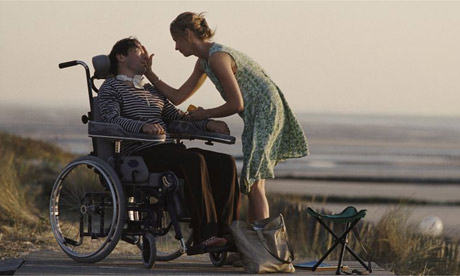
To prevent giving away the film's ending, I'll just say that it is dealt with in a very delicate manner - justice is done to Jean-Do and to all those who aided him in his undoubted frustration with the card that had been dealt him.
It should also be noted that in addition to compelling performances and a taut script, The Diving Bell and the Butterfly is an impressive technical achievement. The cinematography of the film is breathtaking, simultaneously throwing you off balance while engaging you completely. We are allowed to see the world as Jean-Do sees it in large part due to the cinematographic decisions made. Likewise, what can be said about this film that ultimately does not reference the film's auteur, Julian Schnabel? His dedication to his vision is evident in the execution of every moment of The Diving Bell and the Butterfly, from the personal touches to sets, to the intimacy engendered between characters, to the overall aura exuded by the film. It will no doubt rank among his greatest works.
Simply put, The Diving Bell and the Butterfly is a beautifully made piece of art. It is a reaffirmation of the value of human life, and a reminder that we all must make the best of what we have. Life is too precious to spend fretting your own existence . . . instead, go out and make the most of it. Live your live.
Thank you, Jean-Do.
Monday, October 20, 2008
Monday Night Double Feature
HBO is a wonderful thing. Cinematic fare of all kinds is at your disposal, and this need be no further evidenced than my double feature earlier tonight. Exhausted from a long day of teachers droning and tests mocking my sleeplessness, I came to the realization that I was experiencing a less-than-usual workload. Thus, I approached my evening with one sentiment in mind: to unwind with a good film or two. It just so happened that I was to come across two distinct pieces of film-making - "The Last Supper," a mid-nineties dark comedy, and "Brokeback Mountain," a film that I had never before seen,yet been aware of due to the great deal of publicity it experienced some years back.

The premise behind "The Last Supper" was what had initially intrigued me: a band of five graduate students holds a Sunday dinner every week, inviting a different inidividual to accompany them at each gathering. The group subsequently engages each individual on societal issues: abortion, homosexuality, the environment, anti-semitism, and so forth. Based upon the results extracted from each guest, a decision is made with respect to the wine to be served - those individuals deemed ignorant, and thus threats to the well-being of society, were served merlot laced with arsenic. Using this methodology, the group systematically disposes of various persons, believeing that in so doing they are aiding mankind in its struggle for a better tomorrow. Matters quickly begin to unravel as the group loses sense of its moral compass - a woman is, for instance, poisoned because she does not like "The Catcher in the Rye."
To save you from any further rehashing of the plot, I'll boil the matter down to a finite sentiment: although the idea driving "The Last Supper" forward appears enough to quench the thirst of curious film-viewers (pun intended), the movie is erradic and fails to make sense of its characters. There is simply no logic behind the motives of this core group, the actions taken by the five twenty-somethings appearing at times unfounded and cringe-worthy. Although the premise did initially draw me to this film, I must say that by midway I was left with an unyielding sense of confusion, irritation, and unsatisfaction. The moral-laden terminus of the film was also a bit too much to stomach (once again, pun intended).

I now turn my attention to a film of a completely different nature - "Brokeback Mountain." Make whatever jokes you will about this film, it is undoubtedly one of the finest this decade has seen. I'm not quite sure why exactly I decided to view this film - perhaps it was the publicity I had recalled engulfing "Brokeback," the mass of hysteria permeating the media-curcuits upon its release. In any case, I had never gotten around to viewing it, but upon seeing its slot in the HBO lineup I felt I owed the film (and the late Heath Ledger) at least one uniterrupted viewing. I was astounded to say the least.
The film is a miasma of beautiful cinematography, delicate performances, a loving script, and the unique vision of director Ang Lee. I'm not sure what it is that I was expecting to leave "Brokeback" with, but it certainly is far more than I could have anticipated - so rich was the execution of this film that I had to stand back for a moment and let everything I had experienced settle.
Upon seeing Ledger's performance, I now fully understand what his loss has meant to the movie industry and to the world at large: his gift for realizing characters will be sorely, sorely missed. His gripping portrayl of Ennis del Mar, a man unable to face the reality of his relationship with the vulnerable, starry-eyed Jack Twist (played with indellible charisma and honesty by Jake Gyllenhaal) is the core of this moving film - a love that cannot be realized because circumstances do not permit. Michelle Williams is perhaps the most heart-wrenching of the entire ensemble, playing the role of Ennis' repressed wife, Alma. Williams' scenes with Ledger are among the film's most memorable moments - awkward movements and glazed eyes conveying more than either character can put into words.
I'll not spoil the end of this film, because it is far too powerful for my brief synopses. Needless to say, much fuss was made over the unconventional love-story the film depicts, but upon viewing "Brokeback Mountain" for yourself, I guarantee that you will see love is formless. This film should simply be viewed with such a mindset: as a great piece of cinema, and one of the great romances of our time.
Indeed, it does appear that my evening away from schoolwork and the semantics that have become my life was just what I needed - grounding me in what truly is of importance: love. Oh, and arsenic . . . can't forget about arsenic.
Sunday, September 28, 2008
Lifted "Spirits"
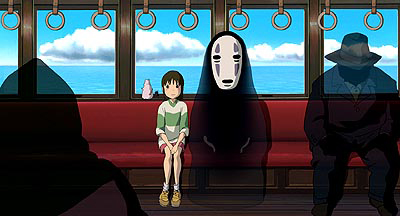
"That's a good start! Once you've met someone you never really forget them. It just takes a while for your memories to return."
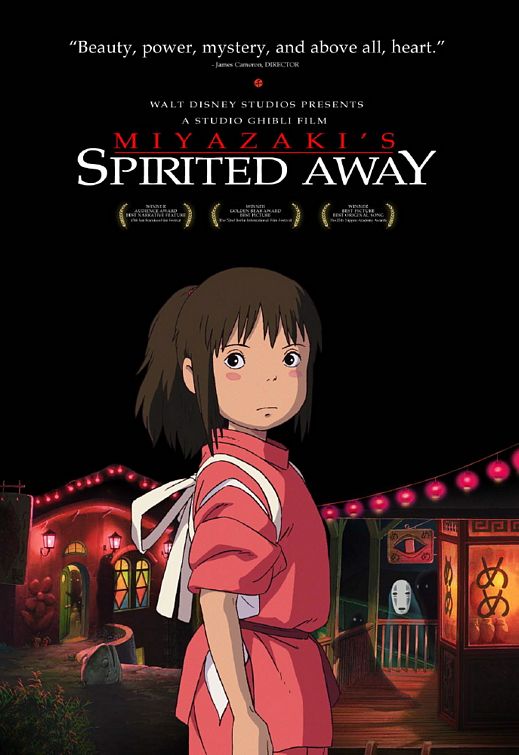 Having recently viewed Hayao Miyazaki's sprawling animated epic "Spirited Away" for the fourth or fifth time this past week, I must admit that the fantastical story of Chihiro has come to hold a special place in my cinematic heart. Beautifully executed by Miyazaki and his animation team, "Spirited Away" excels where Disney fails - it effectively creates a supernatural realm through the use of ambiguity and suggestion. Seemingly odd practices go unexplained: as the movie progresses, we slowly become attuned the conventions of an unconventional spirit world, as does our young heroine. The majesty of the spiritual realm we are unknowingly thrust into arises from its mystery. We are enamored with its variety of colorful characters and lovingly executed scenery because it is new and unexplained, instilling within us a curious child-like wonder.
In viewing parts of the film in its native Japanese language, I must say I have gained a new respect for "Spirited Away" - it is indeed astounding how even a superb English dubbing can dilute the content of a film. The scene in which Yubaba threatens to tear Haku to shreds after ceding to him that Chihiro may leave the bath house after a final test came as a revelation to me: I had seen this film several times beforehand, and yet this singular display of Haku's selflessness (as displayed in the Japanese version) made me rethink the entire ending of the film. It lent a new gravitas to Haku's characterization, the purity of his love for Chihiro, and his willingness to put his own survival on the backburner as he attended to ensuring her safety.
What a gorgeous sentiment... let's see Walt try and beat that one.
The final scene of the film is also best viewed with the Japanese audio, as the English translation does not do justice to the original's poignancy. The silence that marks the end of the film is a testament to the ethereal, translucent quality of the film... we are not certain of whether Chihiro has retained her memories of the spirit world, and perhaps it was a wise decision on Miyazaki's part to leave his audience with this sentiment. In all honesty, Chihiro's ability to recall her experience is irrelevant - she will remain irrevocably changed in either scenario.
All in all, this film is a homerun for parents, children, students of film, spirits, witches, toads, and all other-worldly creatures.
Simply put, this film summons an experience long forgotten by most of us - a realm in which the extraordinary is a daily occurrence, where we are the masters of our own fate. Amen.
Sunday, September 14, 2008
The Art of Film
There comes a time when writers must use their accessibility to an audience as a means of conveying a certain point – a message that for far too long has gone unheard. Using this column as a vehicle for communication in attempting to reach out to the student body at large (assuming, of course, that some of you actually take the time to read it), I’d like to take this opportunity to discuss an under-appreciated elective course I am taking this semester. Created several years ago by Mr. James Dazsenski, The Art of Film is a semester-long course geared at changing the attitude students present toward film – altering the metaphorical lens through which they view the cinema of America and other countries.

With the rigorous course-load that has become typical of high-school students in this day and age – not to mention this district – enjoyable elective classes do indeed fall by the wayside. Many of us are so overburdened with work by our core classes that the thought of possibly taking a less-challenging-yet-still-enriching course proves unappealing.
I am no stranger to this aforementioned logic, this inability to look beyond an AP label to see the true worth of a class like Robotics or Digital Darkroom. I am, however, very grateful that upon reaching this – my senior year – I was able to take the plunge of registering for a class that I was genuinely interested in, a course that I am taking sheerly because of the fact that I want to be there. Instead of having a free fifth period, I chose to be present in an elective class which is in many respects one of the highlights of my day.
With all that said, I’d like to take a moment to describe to you the fifth-period environment I am so fond of. The Art of Film presents films in their entirety – a luxury not often afforded courses that have substantial amounts of material to cover in preparation for a test come mid-May. The class is oriented around the world of film, with undivided attention given to the manner in which films are constructed. From analyzing dialogue, to dissecting scene compositions, to understanding a director’s tactics in dealing with his actors, The Art of Film allows students a vastly deeper appreciation for film. Being a critic of film for The Southerner, it is a sobering experience to be enrolled in a course that directly appeals to my interests. To put it quite bluntly, I love movies, and am more than happy to be taking a class that will have no bearing on my admittance to college because I thoroughly enjoy it.
As of my writing this article, there are currently eight people enrolled in the fifth period section of The Art of Film. Eight people. I have no idea what the statistics are for other classes of this nature, but it does somewhat sadden me to have such a fine class fly so below the radar.
I implore each of you to find the time within your schedule to take a course that you are drawn to, even if it does seem unnecessary for your transcript. It may just prove to be one of the best classes you take during your short time here at Great Neck South. I know I’ve diverged somewhat from the usual content of my column, but I feel obligated as a lover of film and as a fellow student to advocate a course I am so deeply fond of.
If you need to reach me, I’ll be viewing fine cinema in Room 452 fifth period. You are more than welcome to join.
With the rigorous course-load that has become typical of high-school students in this day and age – not to mention this district – enjoyable elective classes do indeed fall by the wayside. Many of us are so overburdened with work by our core classes that the thought of possibly taking a less-challenging-yet-still-enriching course proves unappealing.
I am no stranger to this aforementioned logic, this inability to look beyond an AP label to see the true worth of a class like Robotics or Digital Darkroom. I am, however, very grateful that upon reaching this – my senior year – I was able to take the plunge of registering for a class that I was genuinely interested in, a course that I am taking sheerly because of the fact that I want to be there. Instead of having a free fifth period, I chose to be present in an elective class which is in many respects one of the highlights of my day.
With all that said, I’d like to take a moment to describe to you the fifth-period environment I am so fond of. The Art of Film presents films in their entirety – a luxury not often afforded courses that have substantial amounts of material to cover in preparation for a test come mid-May. The class is oriented around the world of film, with undivided attention given to the manner in which films are constructed. From analyzing dialogue, to dissecting scene compositions, to understanding a director’s tactics in dealing with his actors, The Art of Film allows students a vastly deeper appreciation for film. Being a critic of film for The Southerner, it is a sobering experience to be enrolled in a course that directly appeals to my interests. To put it quite bluntly, I love movies, and am more than happy to be taking a class that will have no bearing on my admittance to college because I thoroughly enjoy it.
As of my writing this article, there are currently eight people enrolled in the fifth period section of The Art of Film. Eight people. I have no idea what the statistics are for other classes of this nature, but it does somewhat sadden me to have such a fine class fly so below the radar.
I implore each of you to find the time within your schedule to take a course that you are drawn to, even if it does seem unnecessary for your transcript. It may just prove to be one of the best classes you take during your short time here at Great Neck South. I know I’ve diverged somewhat from the usual content of my column, but I feel obligated as a lover of film and as a fellow student to advocate a course I am so deeply fond of.
If you need to reach me, I’ll be viewing fine cinema in Room 452 fifth period. You are more than welcome to join.
Tuesday, September 9, 2008
Foreign Films: The Final Frontier for American Moviegoers
Perpetually at the forefront of innovative filmmaking, foreign cinema in recent years has proven itself not only meritorious of critical attention, but also capable of commercial success. Perhaps it is just a theory of mine, but I feel as if a new age has recently been dawning for the American public: we have slowly but surely been further embracing the cinematic fare of other countries.
Although no definitive study can be performed to gauge just to what extent we Americans have allowed foreign filmmakers to assimilate their cinematic visions into our culture at large, it is undeniable the increased press they have been receiving, especially in recent years. For proof of this, one need look no further than this year’s crop of Academy-Award hopefuls, with two French films garnering nominations, and in some instances wins, in major categories.

Julian Schnabel’s The Diving Bell and the Butterfly, based on the memoir of French journalist Jean-Dominique Bauby, chronicles Bauby in the aftermath of a massive stroke, which renders him paralyzed in all but his left eyelid. Schnabel, himself not of Frenchmen, learned to speak the language so that his film might have the authenticity of being a believable adaptation. The Diving Bell and the Butterfly has been widely acknowledged for its unique direction and faithful screenplay: in addition to having appeared on numerous critics’ top ten lists, the film has also attained four Academy Award nominations, including a well-deserved nomination for Schnabel as Best Director.

The second French film last year to traverse the Atlantic and reach American shores is Oliver Dahan’s biopic, La Vie en Rose. Unflinching in its approach, Dahan’s film depicts the life of chanteuse Édith Piaf from the cradle to the grave, rendering the world of the French songbird all too vividly. The film is immeasurably built upon the brilliant performance of Marion Cotillard as Piaf: she does not condescend to the flawed character she plays, but rather immerses herself into the role that justly won her an Academy Award for Best Actress. To help clarify the scope of this matter, the last actress to win for a performance in a foreign film is Sofia Loren, some forty-seven years ago.
Although the world of foreign film is not strictly limited to these French paradigms, it should be noted how they attest to an increasing trend in Hollywood. This is not to say, of course, that America has not welcomed foreign films into its movie theaters in the past – if you question me on this, simply check out the box office receipts for Ang Lee’s Crouching Tiger, Hidden Dragon. This new wave of well-received, critically lauded films merely appears to indicate that America has finally begun to consistently view foreign films as being on par with native productions, if for no other reason than because they are of such high caliber.
The time has come for us view the cinematic work of other countries with open eyes, to embrace films the likes of House of Flying Daggers, Maria Full of Grace, and Pan’s Labyrinth – even if it does mean that we’ll have to read subtitles the next time we go out to the local movie theater.
The Critical Divide
Ah, the division between common folk and that exulted level of the Hollywood critic – the wasteland separating mere mortals and those who seemingly view cinema through kaleidoscope lenses. The role of the movie critic, both venerated and deprecated, has manifested itself into an issue of great importance for the movie industry – there always exists that hope that warm critical reception will propel fledgling, independent films to the forefront of awards races, injecting art-house cinema into mainstream American culture while garnering respectable box-office receipts. Ah, how the critic in all his wisdom can respect “respectable” films. Riddle me then, why is it then that blockbuster sensations so frequently warrant lackluster reviews?
Indeed, how often it is that the work of a critically praised film fails to muster the approval of the heaving, unbridled movie-going masses – is there something that we fail to grasp, some level of pretension that envelops the movie-going elite that will remain unbeknownst to those of us who just view films for pleasure and not for a living? However, I digress. It is evident to most people that critics view films differently – there exists a certain level of film-making that such persons will condone. Films can’t simply exist for the purpose of entertaining. Although I am torn on the matter – I can, contrary to popular belief, appreciate a good action film while fully understanding that no real revolution in art of film-making is being made – part of me is innately drawn to films that can deeply evoke some feeling, somehow, within me: the degree of realism captured by Cassavettes’ A Woman Under the Influence; the vibrancy and unabashedness of Lee’s Do The Right Thing; that shot-of-adrenaline-ravaging-my-veins quality exuded by Tarantino’s Pulp Fiction.
It is a very delicate matter to approach because it is simply so subjective: movie taste is completely dependent upon an individual’s personal preference, and I in no way will attempt to tell you to heed the advise of critics if it is not in your nature to do so. Likewise, disregarding the words of those who consistently view films and are exposed to a plethora of cinematic options would be unwise if you repeatedly find yourself satisfied by their recommendations. It boils down to a matter of opinion – this “critical divide” is alleviated only if you chose to do so. It is in my power, however, to advise you that the world of the movies is not simply restricted to films with shiny autos and drug-trafficking gangsters, or, conversely, to the esoteric concepts of independent films and the English accents of period pieces.
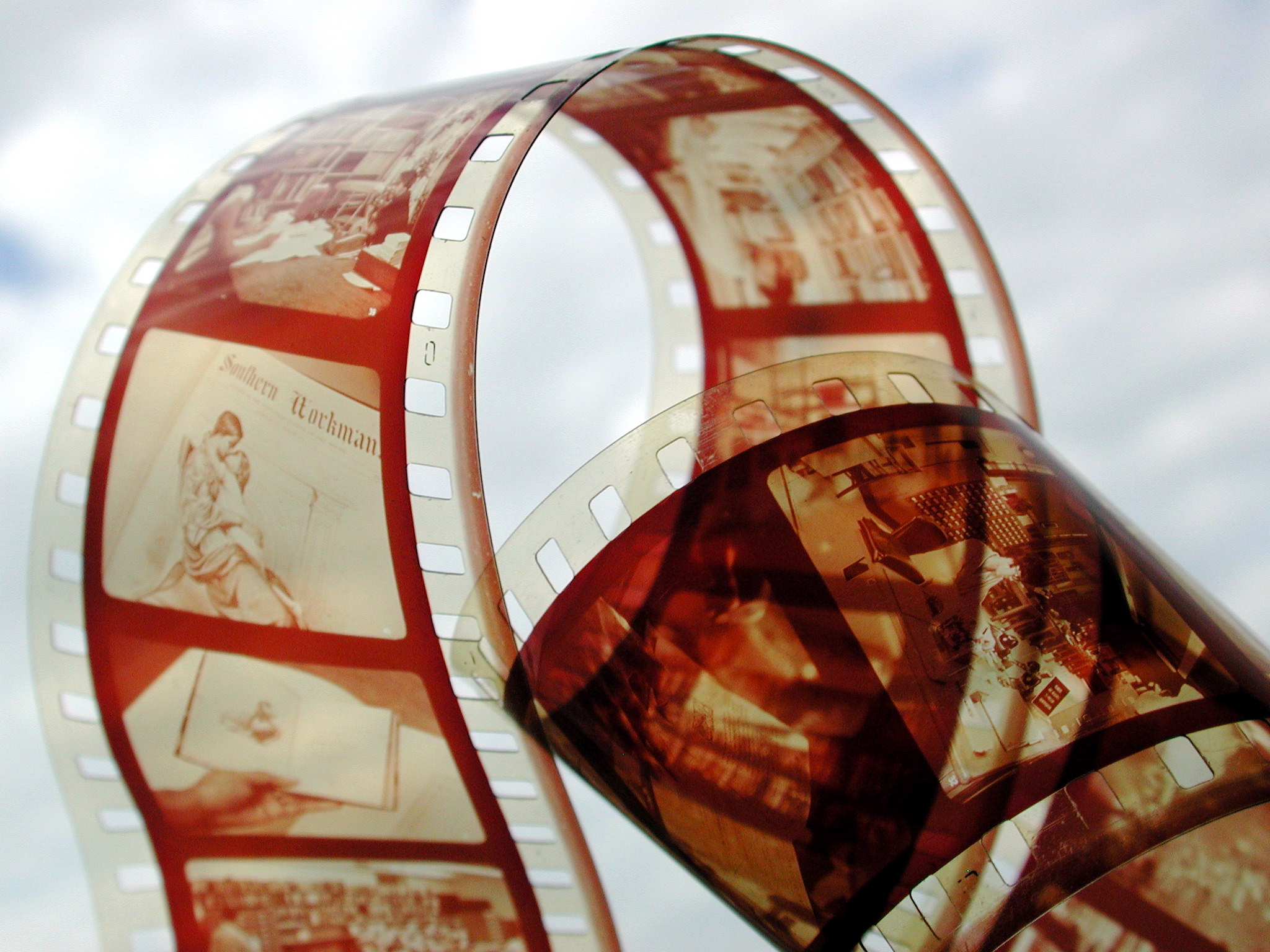
The celluloid reality encompassed within 35 mm film-strips is far too rich an experience to deprive yourself of: allow yourself to be open to what you may consider an unconventional movie-going experience. Listen to critics, but only to an extent. Watch anything that appeals to you and sample cinema that may be out of your normal comfort-zone. Expose yourself to the comedic fare of Knocked Up, but then temper it with the poetic eloquence of American Beauty. Enjoy the rush of watching an intelligent thriller like The Usual Suspects, and then unwind with the romantic surrealism of Michel Gondry’s Eternal Sunshine of the Spotless Mind. Lose yourself in the futurist pseudo-utopianism of Minority Report, and then travel back to Nazi-occupied Morocco with the eternal Casablanca. It really doesn’t matter.
I’m aware that I haven’t resolved anything for you, and that’s just fine. Critics will exist regardless of whatever I spew onto this page – it’s just a matter of making peace with what they represent that I’ve come to aide you with. Don’t completely disregard what they have to say, just look with a discerning eye and understand that an unavoidable bias will always exist. Be willing to make concessions within yourself by enabling yourself with an arsenal of good judgement and common sense. Conquer the “critical divide” – go visit your local Blockbuster.
Subscribe to:
Posts (Atom)
